UFC Prop Bets Explained: Every Proposition Market and How to Find Edge
 Available in US
- Prop Bets Are Where Bookmakers Offer the Widest Margins — and Occasionally the Best Value
- Fight to Go the Distance / Not Go the Distance
- First Knockdown, Total Knockdowns, and Related Markets
- Win in Round 1, Win by Finish, and Other Performance Props
- Using Props as Legs in UFC Bet Builders
- Frequently Asked Questions
Prop Bets Are Where Bookmakers Offer the Widest Margins — and Occasionally the Best Value
Two years ago I noticed a pattern: the “fight to go the distance” prop on a specific matchup was priced at 3.50, implying roughly a 29% probability. My own model, based on both fighters’ historical decision rates and the stylistic matchup, put the distance probability at 45%. That’s a 16-percentage-point discrepancy — the kind of gap that doesn’t exist on moneyline markets. I backed the distance prop, the fight went to a decision, and the bet paid handsomely. Prop bets are where the bookmaker’s pricing model is weakest and where a specialist’s edge is sharpest.
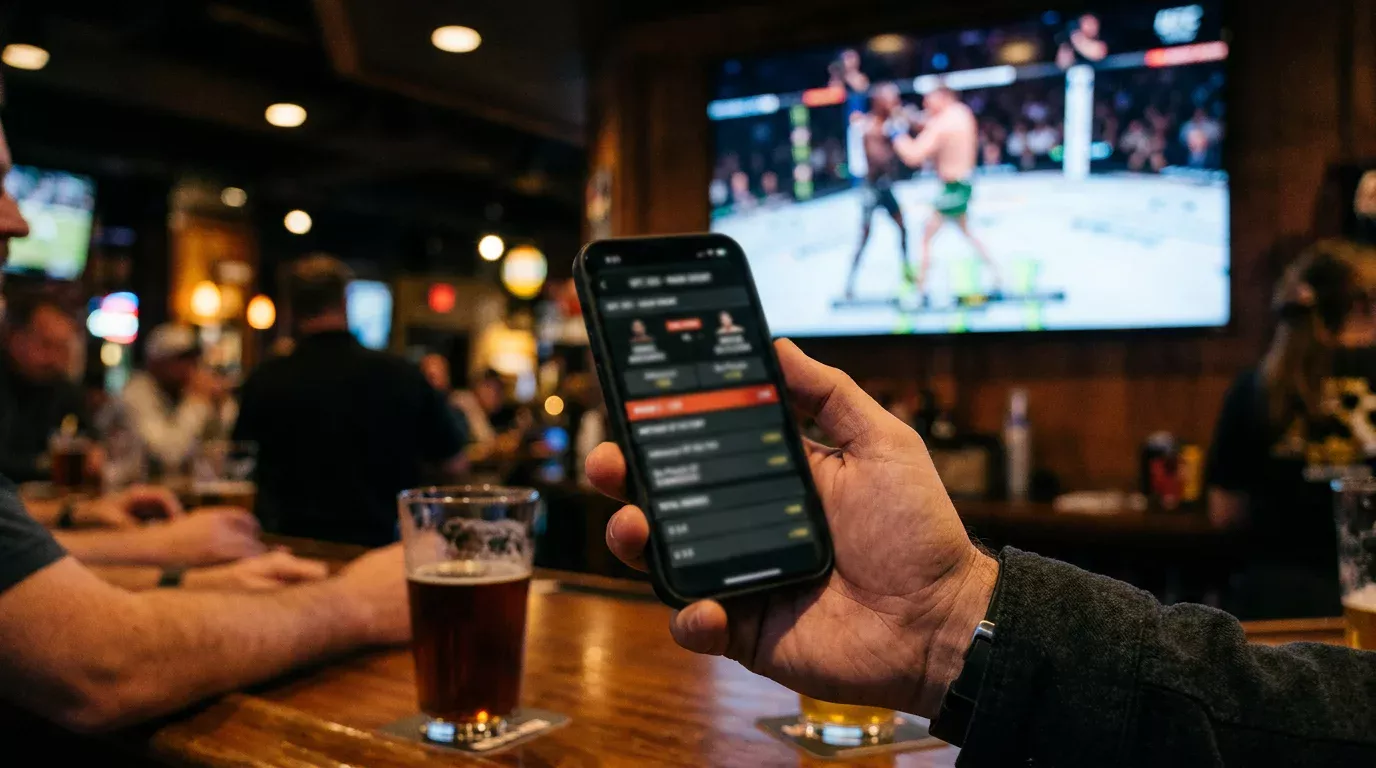
The combined MMA and boxing betting market sits at $3.2 billion and is headed toward $6 billion by 2033. Proposition markets are growing faster than moneylines within that total, driven by bet builder integration and operator investment in granular markets. MMA is one of the most heavily wagered-on sports globally, and the prop segment is where much of the new money flows — often from casual bettors who find the yes/no simplicity of props appealing without understanding how aggressively those props are priced.
See also: check betting on ufc fights for essential UFC resources.
Fight to Go the Distance / Not Go the Distance
This is the most common UFC prop and the one I trade most frequently. “Goes the distance” pays out if the fight reaches the judges’ scorecards. “Does not go the distance” pays out if the fight ends by KO, TKO, submission, or disqualification before the final bell.
The analytical framework is simple: what percentage of each fighter’s career bouts have gone to a decision? If Fighter A has a 60% decision rate and Fighter B has a 55% decision rate, the baseline distance probability is roughly the average of those rates, adjusted for the specific stylistic interaction. Two high-output strikers with strong chins push the probability up. A knockout artist facing a fighter with a glass chin pushes it down.
Where I find the most value is on “goes the distance” at longer prices. The public betting bias toward finishes — driven by the desire for excitement — systematically inflates “does not go the distance” demand, which compresses its odds and widens the “goes the distance” price beyond fair value. This is the most consistent pricing bias I’ve identified in UFC prop markets over 11 years of tracking.
First Knockdown, Total Knockdowns, and Related Markets
Knockdown props ask whether a knockdown will occur during the fight, which fighter will score the first knockdown, or how many total knockdowns the fight will produce. These markets are available primarily on main card fights at major UK operators and carry margins of 8-12%.
The analytical challenge with knockdown props is distinguishing between flash knockdowns (a fighter touches the canvas but recovers immediately) and genuine knockdowns that shift the fight’s momentum. The betting market doesn’t differentiate — any knockdown counts — which means fighters who throw looping punches that clip opponents off-balance generate knockdown stats that overstate their finishing power. I focus on clean knockdowns per fight from official statistics rather than raw knockdown counts when assessing these markets.
Total knockdowns is a niche market that appears on select main events. The over/under is typically set at 0.5 or 1.5. At heavyweight, the over 0.5 knockdowns is almost always priced too short because the public expects heavyweights to produce knockdowns constantly. At lighter weight classes, the over 0.5 sometimes offers genuine value when two aggressive strikers with poor defensive habits meet.
Win in Round 1, Win by Finish, and Other Performance Props
“Win in round one” is the simplest performance prop — it pays out if a specified fighter wins during the first five minutes of the fight by any method. The pricing reflects the probability of an early stoppage, and I evaluate it using the same fast-starter metrics I track for round betting: first-round output rate, opponent’s first-round absorption rate, and historical first-round finish percentage.
“Win by finish” collapses all stoppage methods into one selection — KO, TKO, or submission — and pays out if the specified fighter wins before the scorecards. This is a broader proposition than method of victory betting and carries lower odds but a higher probability of landing. I use it when my analysis points strongly toward a stoppage but I can’t distinguish with confidence between a KO and a submission as the specific method.
Some operators also offer “fighter to be knocked down” and “both fighters to be knocked down” as performance props on selected bouts. These are pure entertainment bets with margins exceeding 15% — I track them for research purposes but rarely find the pricing attractive enough to justify a stake.
Using Props as Legs in UFC Bet Builders
Props become significantly more interesting when combined with other selections in a bet builder. Nicholas Smith of TKO Group Holdings described UFC as a sport offering “deeper insights, dynamic odds, and more ways to engage responsibly with every bout” — and the bet builder is where that engagement translates into analytical opportunity.
See also: focus on specific rounds with our UFC round betting explained guide.
A prop leg in a bet builder functions differently from a standalone prop bet because correlation with other legs changes the effective odds. “Goes the distance” combined with a specific fighter winning by decision is highly correlated — both require the fight to last — so the combined price is lower than the individual legs multiplied together. But “does not go the distance” combined with a specific fighter’s moneyline is less correlated (the fighter can win by decision too), which preserves more of the combined odds. Understanding which prop-plus-moneyline combinations retain value after correlation adjustment is where the bet builder guide becomes essential reading.
Frequently Asked Questions
What is the ‘goes the distance’ prop bet in UFC?
The ‘goes the distance’ prop bet pays out if the fight lasts the full scheduled duration and reaches the judges’ scorecards — three rounds for a standard bout or five rounds for a championship fight. It does not matter which fighter wins the decision. If the fight ends by KO, TKO, submission, or disqualification before the final bell, the ‘goes the distance’ bet loses.
Are UFC prop bet odds worse than moneyline odds?
Yes, in terms of bookmaker margin. Prop bet markets typically carry an overround of 8-12%, compared to 3-5% on moneyline markets. The wider margin reflects the bookmaker’s lower confidence in pricing these more granular outcomes. However, that same lower confidence means prop markets are also less efficient, which creates opportunities for bettors whose analysis is sharper than the bookmaker’s model on specific matchup dynamics.
Published by the Betting on ufc Fights team.