UFC Round Betting Explained: Exact Round, Round Groups, and Over/Under Rounds
 Available in US
- Round Betting Is the Highest-Odds Market in UFC — Here’s How It Works
- Exact Round Betting: Risk, Reward, and Realistic Expectations
- Round Group Betting: A Middle Ground Between Winner and Exact Round
- Over/Under Total Rounds: How to Analyse Fight Duration
- Linking Round Betting to Method of Victory for Informed Picks
- Frequently Asked Questions
Round Betting Is the Highest-Odds Market in UFC — Here’s How It Works
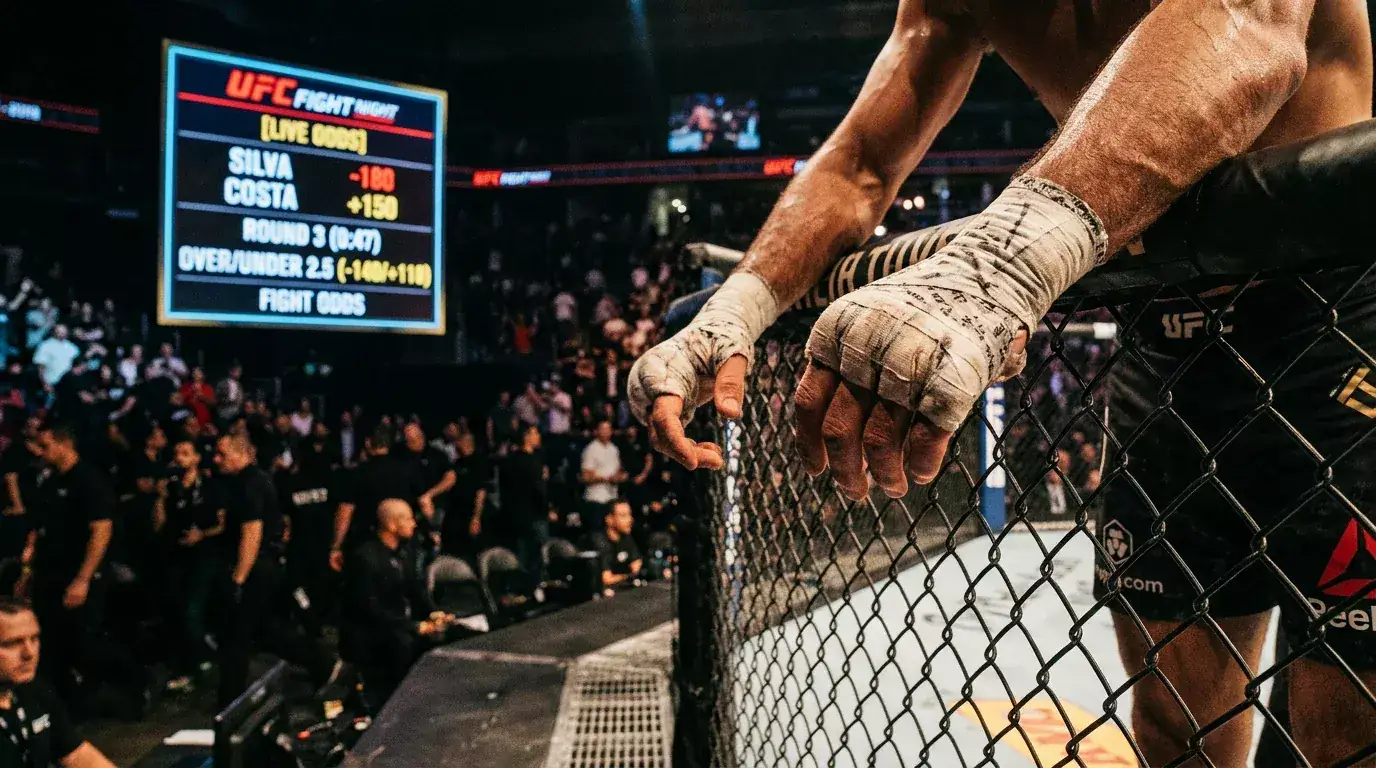
My biggest ever single-bet profit came from a round two KO selection at 14.00. Fourteen times my stake, from a single fight, on a market that most punters either ignore or treat as a lottery. Round betting is the highest-paying regular market in UFC, and it’s also the most poorly understood — which is exactly why it rewards the bettors who do understand it.
MMA betting handle in the US reached $10.3 billion in 2024, and a growing share of that volume flows into granular markets like round betting as operators expand their UFC offerings. The prices are longer because the probability of any specific round being the finishing round is inherently lower than the probability of a fighter simply winning. But “lower probability” doesn’t mean “no edge.” It means the edge needs to be larger to compensate — and in round betting, the bookmaker’s wider margins leave room for exactly that.
See also: check betting on ufc fights for all UFC wagering strategies.
Exact Round Betting: Risk, Reward, and Realistic Expectations
Exact round betting asks you to predict not just the winner and the method but the specific round in which the fight ends. On a standard three-round UFC bout across the organisation’s 43 annual events, the market typically offers six selections: Fighter A in round one, round two, or round three, and the same for Fighter B. Odds range from 5.00 to 20.00+ depending on the matchup and the round.
The first round is the most popular selection because casual bettors gravitate toward the dramatic early finish. That popularity compresses round one odds, making them less attractive than rounds two and three from a value perspective. I’ve found the best pricing consistently sits in round two — early enough that a stoppage fighter can realistically finish, but late enough that the public money hasn’t compressed the price.
Realistic expectations matter here. Even a well-researched exact round bet will lose 80-90% of the time. A 12.00 selection implies roughly an 8% probability, and my own model rarely assigns more than 12-15% to any specific round. The edge is real but narrow, which means exact round bets demand strict stake sizing — I never risk more than 0.5% of bankroll on a single exact round pick, and I treat them as supplementary plays alongside my core moneyline and method of victory positions.
Round Group Betting: A Middle Ground Between Winner and Exact Round
Round groups aggregate multiple rounds into a single selection — “Fighter A to win in rounds one to two” or “Fight to end in rounds two to three.” The prices are lower than exact round bets but higher than moneylines, typically sitting between 3.00 and 8.00. This is where I concentrate most of my round-level betting because the probability is high enough to sustain a reasonable hit rate while the odds still offer meaningful premium over a simple fight winner bet.
The analytical approach is different from exact round betting. Instead of predicting a specific three-minute window, you’re predicting a phase of the fight — early, middle, or late. A fight between two heavy hitters with poor cardio is a strong candidate for “rounds one to two” finishes. A fight between a technical striker and a durable wrestler often plays out as a “rounds two to three” contest, where the accumulation of damage finally breaks through the defensive resistance.
Round groups also reduce the impact of the bookmaker’s margin. The overround on a round group market is typically lower than on exact rounds because the probability per selection is higher, giving the bookmaker less room to inflate without the odds becoming obviously uncompetitive. That tighter margin translates directly into better value for the bettor.
Over/Under Total Rounds: How to Analyse Fight Duration
The over/under rounds market strips the question down to its simplest form: will the fight last longer or shorter than a specified number of rounds? The standard line is 1.5 rounds for a three-round fight (sometimes 2.5) and 2.5 or 3.5 for five-round championship bouts. This is the most accessible round-level market and the one where analytical tools — particularly cardio degradation data and finish rate statistics — translate most directly into betting edge.
I analyse fight duration through two lenses. The first is historical finish rate: what percentage of each fighter’s bouts have ended inside the distance, and in which rounds? A fighter who has been finished in four of their last five bouts is a strong “under” indicator. The second is stylistic interaction: does this matchup profile produce finishes or grinds? A wrestler facing a striker with poor takedown defence usually means extended grappling sequences that eat clock without producing finishes, pushing the fight toward the “over.”
The pricing on over/under markets is generally tighter than round groups or exact rounds — closer to moneyline-level margins — which means the edge per bet is smaller but the hit rate is higher. I use over/under bets as volume plays: lower-risk, lower-reward positions that build steady returns across a season of events.
Linking Round Betting to Method of Victory for Informed Picks
The most sophisticated round betting strategy connects round predictions to method of victory analysis. If your model predicts a submission finish, the round distribution skews later — submissions in UFC happen disproportionately in rounds two and three, after the grappler has worn down their opponent’s resistance. If your model predicts a KO, the distribution skews earlier, with round one being the most common knockout round across all UFC bouts. Linking these patterns to method of victory analysis creates compound insights that improve both your round and method selections simultaneously.
I build this connection into my pre-fight analysis for every card. If I’ve identified a strong method of victory angle — say, Fighter A by submission — I automatically check the round distribution for submission finishes in that weight class and against that opponent’s defensive profile. The round group that overlaps most with my method prediction becomes my round-level bet, and the two positions reinforce each other as a cohesive analytical thesis rather than two independent gambles.
See also: predict fight outcomes with our UFC method of victory betting guide.
Frequently Asked Questions
What happens to a round bet if the fight ends between rounds?
If a corner stoppage occurs between rounds, most UK bookmakers settle the result as occurring in the round that just ended. For example, if a corner throws in the towel between rounds two and three, the fight is typically settled as ending in round two. Settlement rules vary by operator, so checking the specific bookmaker’s round betting rules before placing is recommended.
Are round group bets better value than exact round bets in UFC?
Round group bets generally offer better expected value for most bettors because the higher probability per selection means a more sustainable hit rate, and the bookmaker margin on round groups is typically tighter than on exact rounds. Exact round bets suit bettors with very high conviction about a specific timing window and strict bankroll discipline to absorb the low hit rate. For most punters, round groups provide the stronger risk-adjusted return.
Prepared by the Betting on ufc Fights editorial staff.