UFC Cash Out Strategy: When to Lock In Profits and When to Let the Fight Play Out
 Available in US
Every Cash Out Offer from a Bookmaker Is Priced in Their Favour
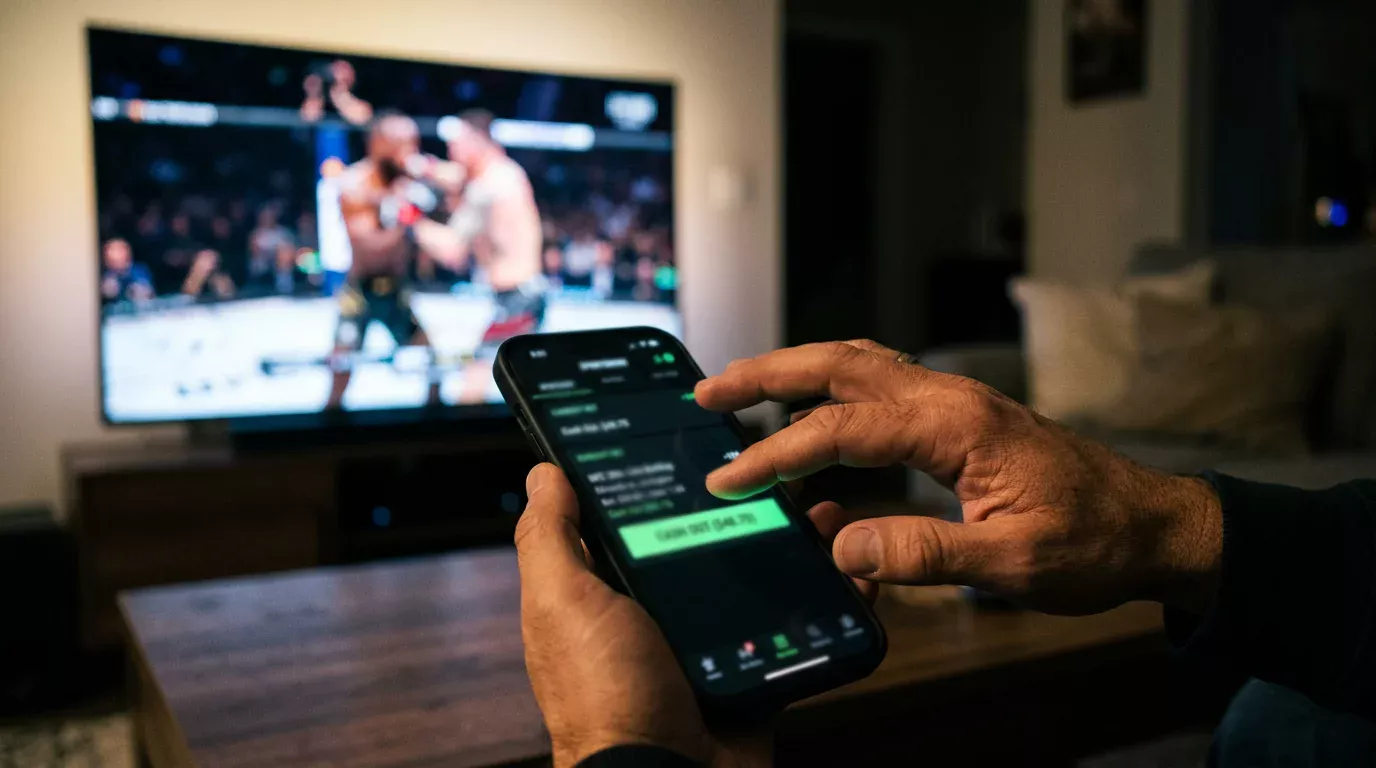
I cashed out a winning position on a UFC main event in 2023 for a 60-pound profit, then watched my original bet pay 180 pounds two rounds later. That 120-pound difference taught me more about cash out mechanics than any theoretical analysis could. The cash out button is designed to feel like control. In reality, it’s a new bet — one the bookmaker prices in their favour every single time.
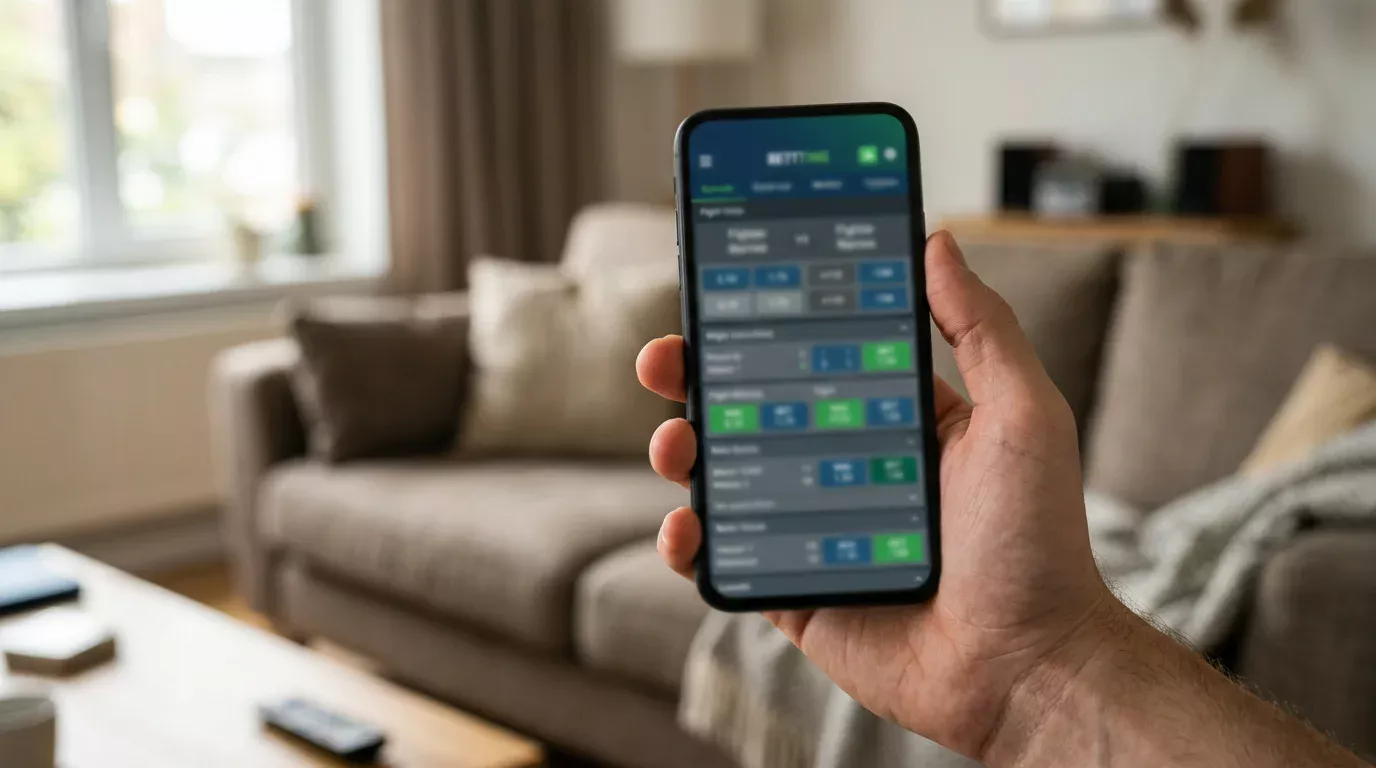
UFC generated $1.4 billion in total revenue in 2024, and a significant chunk of the betting revenue around that organisation flows through cash out features. Bookmakers have invested heavily in making the cash out interface seamless, instant, and emotionally appealing. A green number flashing on your screen mid-fight, offering guaranteed profit — of course you want to tap it. Understanding when that impulse is costing you money, and when it’s actually the right move, is what separates disciplined bettors from everyone else.
See also: explore betting on ufc fights for more UFC betting strategies.
How Bookmakers Price UFC Cash Out Offers
A cash out offer is not your bet’s current value. It’s your bet’s current value minus a margin — typically 3-8% depending on the operator, the market, and the timing. The bookmaker calculates the fair value of your open position based on the current live odds, then shaves off their cut before presenting the number to you.
Here’s how it works mechanically. Say you backed Fighter A pre-fight at 3.00 with a 10-pound stake. After round one, Fighter A is dominating and the live moneyline has moved to 1.40. The fair value of your bet is now approximately 10 x (3.00 / 1.40) = 21.43 pounds. The bookmaker offers you a cash out of, say, 19.50 — keeping the 1.93-pound difference as their margin on the transaction.
That margin is the cost of certainty. You’re paying the bookmaker to absorb the risk that Fighter A might still lose. Whether that cost is worth paying depends entirely on two things: your assessment of how likely Fighter A is to actually win from this position, and your emotional capacity to handle the potential loss if you hold and it goes wrong. The first is analytical. The second is psychological. Both matter.
Scenarios Where Cashing Out Is Mathematically Correct
There are three situations where I cash out UFC bets, and only three. Each has a specific logical foundation that justifies absorbing the bookmaker’s margin on the transaction.
First: when new information emerges during the fight that my pre-fight analysis didn’t account for. If I backed a wrestler and he’s been outstruck badly in round one while barely attempting takedowns, something is wrong — injury, game plan failure, or a skill gap I underestimated. The live odds may not yet fully reflect what I’m seeing because the algorithm updates on scoreable actions, not on qualitative assessment. Cashing out at a small profit (or reduced loss) based on live observation that the market hasn’t priced in is the closest thing to an informational edge in the cash out decision.
Second: when the cash out amount exceeds the expected value of holding. This requires a quick mental calculation. If the fight is a 43-event-per-year UFC card and my fighter is leading after two rounds of a three-rounder, I estimate their remaining win probability at roughly 85-90%. If the cash out offer represents 92% of the full payout, holding is marginally better in expected value terms — but the gap is small enough that risk-averse bettors can justify cashing out. If the offer represents only 75% of the full payout, holding is clearly superior and cashing out destroys too much value.
Third: when I need to manage my bankroll for a higher-conviction bet later on the same card. This is portfolio management, not individual bet optimisation. If I have 50 pounds in open positions and a strong opinion on the main event that I want to stake meaningfully, cashing out a secondary position to free up bankroll is a legitimate strategic move — even if the individual cash out is slightly negative expected value.
When to Hold: Situations Where Cash Out Destroys Value
The default should always be to hold. I say this because the cash out margin means that over a large sample, you’ll give back more in cash out costs than you’ll save by avoiding losses. The mathematical expectation favours holding in the majority of scenarios.
The most common hold situation is when your fighter is winning and nothing has changed from your pre-fight analysis. If you backed a wrestler because of his grappling advantage, he’s controlling the fight on the ground, and the path to victory is playing out exactly as expected — why would you pay the bookmaker 5-8% of your potential profit to exit early? The fight is unfolding according to your thesis. Let it play out.
The second hold situation is when the cash out offer is being driven by a dramatic moment that doesn’t fundamentally change the fight’s trajectory. A fighter who gets wobbled in round one but recovers within seconds triggers a massive odds swing — and the cash out offer drops accordingly. If your analysis suggests the wobble was a momentary flash rather than a sign of structural vulnerability, the depressed cash out price is the worst time to sell. The odds will recover between rounds if your assessment is correct, and you’ll have held through the panic at no additional cost.
Holding requires emotional discipline that cashing out doesn’t. The button is there, the money is available, and the fear of losing a winning position is powerful. I’ve missed cash outs that would have saved me money. I’ve also held through fear and collected full payouts dozens of times. Over 11 years, the holds have been worth significantly more than the missed cash outs have cost.
Cash Out in Live UFC Betting: Round-by-Round Decisions
Live UFC betting adds a layer of complexity to the cash out decision because the odds shift in real time based on in-fight events. bet365’s Trip Stoddard described their UFC product as being “uniquely positioned to elevate how fans experience every fight” — and that real-time experience extends to cash out offers that update between rounds with fresh pricing.
The between-round window is the optimal moment for a cash out decision. During the round, odds fluctuate rapidly based on strikes, takedowns, and visual momentum — the cash out offer bounces with them, making calm assessment difficult. Between rounds, the market settles for 60 seconds, the cash out price stabilises, and you have time to compare the offer against your own probability estimate.
My process during live events is systematic. After each round, I reassess three things: is the fight playing out as my pre-fight analysis predicted? Has anything changed that shifts my win probability estimate by more than 10 percentage points? Is the cash out offer above or below 85% of the full payout? If all three answers point toward holding, I hold. If any one of them points toward cashing out, I consider it seriously. If two or more point toward cashing out, I take it. For a broader view of how live UFC odds work and where the biggest swings happen, the live UFC betting guide covers the mechanics in depth.
See also: find overlooked odds with our UFC value betting guide.
Frequently Asked Questions
Do all UK bookmakers offer cash out on UFC bets?
Most major UKGC-licensed bookmakers offer cash out on pre-fight UFC moneyline bets, though availability on prop bets, round betting, and accumulator legs varies by operator. Cash out during live fights is available at operators with in-play UFC products, but the feature may be temporarily suspended during active exchanges in a round when odds are moving too rapidly to price accurately.
Can I partially cash out a UFC bet?
Several UK bookmakers offer partial cash out, allowing you to lock in a portion of your profit while leaving the rest of your bet active. This is a useful middle ground when you want to reduce exposure without fully exiting a position. The partial cash out is priced with the same margin as a full cash out, so each portion you close still costs you the bookmaker’s cut on that portion.
Written by the editors at Betting on ufc Fights.