UFC PPV Betting Strategy: How Numbered Events Demand a Different Approach
 Available in US
- PPV Cards Are the Hardest UFC Events to Beat — Here’s Why and How
- Why PPV Lines Are Tighter and What That Means for Value
- Betting on Championship Fights: Unique Dynamics of Five-Round Contests
- Finding Value on PPV Undercards While Attention Stays on the Main Event
- How to Adjust Your Approach Between PPV and Weekly Cards
- Frequently Asked Questions
PPV Cards Are the Hardest UFC Events to Beat — Here’s Why and How
The first PPV card I ever bet on cost me 40% of my bankroll in a single night. I loaded up on every main card fight, backed the names I recognised, and watched the favourites fall one after another. That was a decade ago, and the lesson has never left me: numbered UFC events are where casual money floods in and where the lines get sharp enough to cut you.
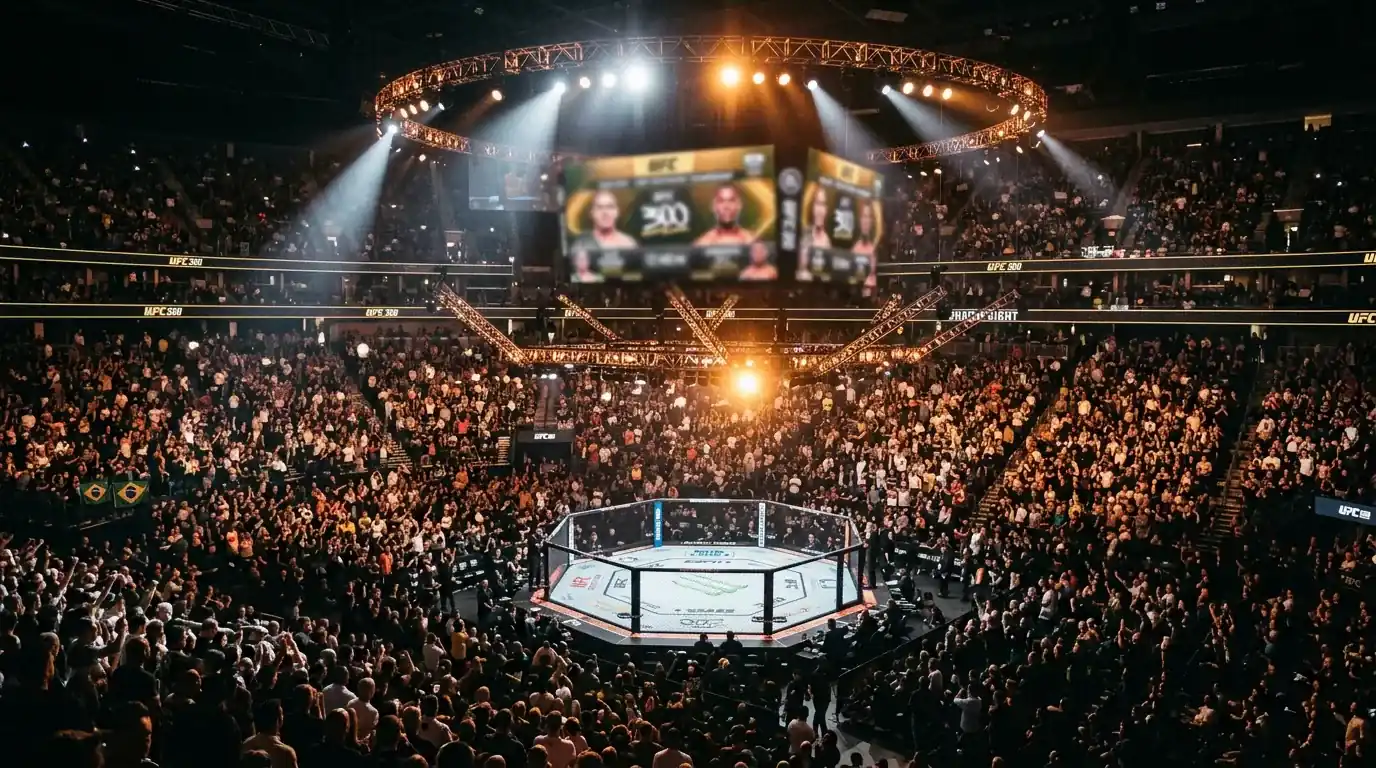
UFC generated $1.4 billion in total revenue in 2024, and a disproportionate share of that — both in pay-per-view buys and betting volume — concentrates on the 13 numbered events each year. These cards attract the biggest names, the widest media coverage, and the heaviest betting action from professional syndicates. All of which means the odds are priced more efficiently than on any other UFC card type. Finding value here is harder. Not impossible — but harder, and it demands specific tactical adjustments.
See also: return to betting on ufc fights for the latest UFC insights.
Why PPV Lines Are Tighter and What That Means for Value
Sharp money — the wagers placed by professional bettors and syndicates who move lines for a living — concentrates on events with the highest public interest. PPV main events are their primary target because the liquidity is deepest and the media coverage gives them the most data to work with. By the time a casual punter checks the odds on fight day, the smart money has already corrected most of the mispricings that existed when the lines opened.
I track opening-to-closing line movement on every UFC event, and the data is clear: main event moneylines on numbered cards move an average of 6-8% from open to close, compared to 3-4% on Fight Night main events. That larger movement isn’t random noise — it’s the market digesting information and converging on the true probability. By the time closing odds are posted, the remaining edge available to a well-informed bettor is significantly thinner.
What this means in practice: if you’re going to bet PPV main events, you need to act earlier in the week. The window between line release and sharp-money correction is where value exists. By Friday, most of it is gone. I place my PPV main event bets no later than Wednesday unless I have a specific reason related to late-breaking information — injury updates, weight cut reports — to wait.
Betting on Championship Fights: Unique Dynamics of Five-Round Contests
Championship bouts are scheduled for five rounds instead of three, and that extra distance changes the betting calculus in ways most punters underestimate. UFC signed a $7.7 billion media deal with Paramount in August 2025, and championship fights are the marquee content that justifies that investment. They’re also the fights where cardio, pacing, and late-round adjustments matter most — and where the over/under rounds market becomes significantly more interesting.
In three-round fights, a first-round knockdown can end things quickly. In five-round fights, fighters have more time to recover, more room to implement Plan B, and more rounds for the better-conditioned athlete to take over. I’ve seen championship underdogs who looked finished after two rounds come back to win decisions in rounds three through five because their gas tanks outlasted the favourite’s explosiveness. The over/under market on five-rounders consistently offers better value than on three-rounders because the longer format introduces more variance that the odds don’t always capture.
The method of victory distribution also shifts. Championship fights go to a decision more frequently than three-round bouts — roughly 45-50% of the time versus 35-40% on non-title fights. If your analysis points to a closely matched technical fight, the decision market on a five-rounder is often mispriced relative to the true probability because the public’s bias toward finishes suppresses the decision odds to attractive levels.
Finding Value on PPV Undercards While Attention Stays on the Main Event
Here’s the tactical insight that took me years to internalise: the best value on a PPV card is almost never the main event. It’s the undercard. While casual money and media attention fixate on the headline bout, the fighters two or three spots down the card receive a fraction of the analytical scrutiny. The bookmaker still prices those fights, of course, but with less confidence and wider margins — which means more room for an informed bettor to exploit.
PPV undercards often feature rising contenders who are one or two wins away from a title shot. These fighters are well-known enough to have substantial data available but not famous enough to attract the sharp-money attention that makes main event lines so tight. I allocate roughly 60% of my PPV betting stake to undercard fights and only 40% to the main event and co-main event combined. That allocation reflects where my edge is greatest, not where the hype is loudest.
The other undercard angle: late additions and short-notice replacements. PPV cards are more likely to have late changes because of the financial pressure on the UFC to keep the card stacked. A replacement fighter slotted into the co-main at two weeks’ notice is a repricing event that the market often handles clumsily, especially when the replacement’s style is dramatically different from the original opponent’s.
How to Adjust Your Approach Between PPV and Weekly Cards
My betting week looks fundamentally different depending on whether there’s a numbered event or a Fight Night. For PPV cards, I start analysis on Monday and place early bets by Wednesday. I size main event stakes smaller (1% of bankroll) because the edge is thinner and the market more efficient. I concentrate on undercard value and use bet builders sparingly — the correlation adjustments on well-publicised fights tend to be tighter.
For Fight Nights, the approach inverts. I do the bulk of my research in a compressed window — Tuesday to Thursday — because the lines open later. I size stakes slightly larger (1.5-2%) because the softer lines offer wider edges. And I focus almost exclusively on moneyline bets, since the prop and round markets are limited on non-PPV cards. The detailed breakdown of how to exploit Fight Night-specific opportunities lives in the Fight Night betting guide.
The transition between these two modes is what separates a weekend punter from a year-round UFC bettor. The UFC’s calendar never stops — 43 events per year means a card nearly every week. Treating each event type with its own strategy, rather than applying one approach to everything, is the structural advantage that compounds over a full season.
See also: sharpen your in-play approach with our live UFC betting guide.
Frequently Asked Questions
Do championship fights offer more betting markets than standard bouts?
Yes, five-round championship fights typically have expanded market coverage at UK bookmakers. You will find exact round betting through all five rounds, round group markets covering rounds four and five, and often additional proposition bets like whether the fight goes to the scorecards. The extra rounds create more market permutations, which means more opportunities but also more pricing complexity.
Is the public money bias stronger on UFC PPV main events?
Significantly. PPV main events attract the largest share of recreational betting money, and casual bettors disproportionately back the more famous fighter or the favourite. This public bias can suppress underdog odds to levels that offer value, but it also attracts sharp money that corrects the imbalance quickly. The window for exploiting public bias on PPV main events is narrowest of any UFC card type.
Published by the Betting on ufc Fights team.